
Labour reliability erosion has damaged Canada’s global supply chain brand
Nutrien bomb: Potash giant’s $1B U.S. export terminal investment decision is the latest indicator of how business-hostile even Canadian companies view their homeland

Before the Substack Shipping News (SSN) moves on from Carney Canada’s trade diversification blueprint, there’s one more critical element that needs to be discussed: HR.
Debate over the country’s ability to deliver on its global trade diversification ambitions was the focus of the previous SSN instalment.
SSN’s verdict on that 21st-century Canadian delivery ability: Not ready for prime time.
Senior government roadblocks are a major consideration in that verdict.
News that Saskatchewan fertilizer colossus Nutrien (TSX:NTR) plans to invest $1 billion in a potash export terminal in Longview, Washington, rather than a Canadian West Coast port, adds supporting evidence to that verdict.
Many of the issues raised in the SSN story were considered in Nutrien’s decision, as they would be by any astute export business making a significant long-term infrastructure investment.
Uncertainty over private property rights, suffocation by regulation, First Nations negotiations carousels, tanker bans, and government permitting that progresses at a geological pace, if it progresses at all. These are all substantive hurdles for businesses in B.C., but not in Washington state.
However, HR was also atop Nutrien’s business fundamentals list.
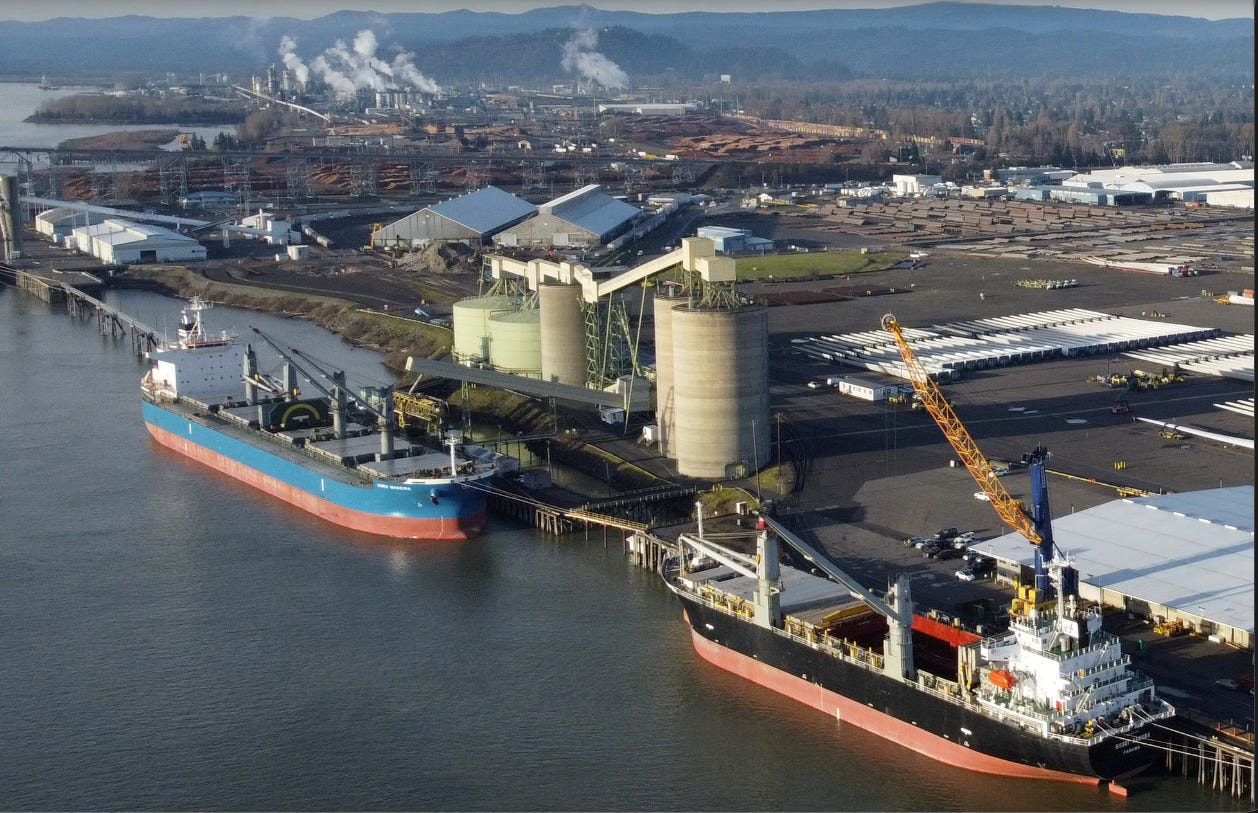
When it comes to port terminal labour stability and reliability, Washington state was again the preferred choice.
No wonder.
The parade of labour disputes that have disrupted rail and port services in Canada in general and along its West Coast in particular is long and mutually corrosive for the combatants and the reputation of the country’s supply chain reliability.
Vancouver’s port reliability suffered badly in the 1970s, when there were lengthy longshore labour disruptions, and again in the late 1990s when employers locked out the International Longshore and Warehouse Union (ILWU).
Illegal work stoppages have also strained employer-union relationships. In 2010, the BC Maritime Employers Association claimed there had been 35 since 2008.
That relationship began unravelling more recently with the Port of Vancouver’s 2014 independent truckers strike, continued with the COVID-19 West Coast port congestion crisis and 2023’s 13-day ILWU Canada strike that disrupted Canada’s Asia-Pacific Gateway cargo flow.
2024’s brief but damaging shutdown of the country’s two national railways accelerated that unravelling and provided another boost to U.S. and Mexican West Coast port competitors.
“There absolutely has to be a conversation [about work stoppages]. … If we are talking about a global competitive supply, we have to … update these [labour-management] frameworks.”
– Jason Valliere, assistant vice-president of sales and marketing for CN
Nutrien’s decision to invest in American port infrastructure results in part from that reliability erosion and the Liberal government’s inability to cultivate business investment in Canada.
Jason Valliere, assistant vice-president of sales and marketing for Canadian National Railway Co. (TSX:CNR), said work stoppages from labour disputes over the past few years have “really tested” Canada’s brand as a reliable and safe supply chain.
Speaking as a panellist during Prairie Sky Strategy’s (PSS) November 20 Doubling Down on Diversification: Western Canada’s Export Imperative panel, Valliere said, “There absolutely has to be a conversation [about work stoppages]. … If we are talking about a global competitive supply, we have to … update these [labour-management] frameworks.”
Marko Dekovic, the vice-president of public affairs for Global Container Terminals (GCT), agreed.
“I’d say the last five years have absolutely destroyed that brand. And we have to revisit how we can restore the confidence of our international trade partners – again.”
National Maritime Group CEO Derrick Hynes told this year’s International Trade Summit that unnecessary and prolonged air, marine, and rail work stoppages over the past two years have created real challenges for Canadian businesses and consumers.
He said the government therefore needs new tools that keep parties at contract bargaining tables to prevent future strikes.
Hynes suggested that a good first step would be to implement the 2025 Industrial Inquiry Commission on West Coast Ports (IICWCP) report’s recommendations.
The recommendations, according to commission chairman Vince Ready and commission member Amanda Rogers, “offer a roadmap for achieving lasting stability and prosperity at West Coast ports.”
Modernizing collective bargaining practices to promote greater collaboration between labour and management was at the heart of the IICWCP.
As Ready and Rogers emphasized, the success of its recommendations “hinges on the willingness of stakeholders to embrace change and work together toward a common goal.”
Embracing change and working together has proven to be difficult, if not impossible, for the current labour-management leadership along Canada’s waterfront.
But as competition for cargo on the transpacific and other major East-West trade lanes increases, embracing change and working together will separate winners from losers in that contest.
At this point, not much smart money is riding on Canada.
www.linkedin.com/in/timothyrenshaw
@trenshaw24.bsky.social
@timothyrenshaw